Denoise: LightRoom vs DxO PureRAW 5
A quick down-and-dirty comparison between LR and DxO denoise. There is a very clear winner here.
I was doing a fair amount of low-light shooting with my OM-1 Mark II, and the noise was just killing me during editing. I recently purchased DxO PureRAW 5 and haven’t really used it yet. I thought I’d do a quick comparison. Nothing scientific here, and I’m not even sure how much will show up in the screenshots below.
The OM-1 is a 20.4 MP Micro Four Thirds sensor and does not handle low light very well. So noise can be a real issue at times. I’ve always just used LR denoise, and it’s been good enough, but after seeing what DxO can do, I’ll be using DxO for all serious noise issues.
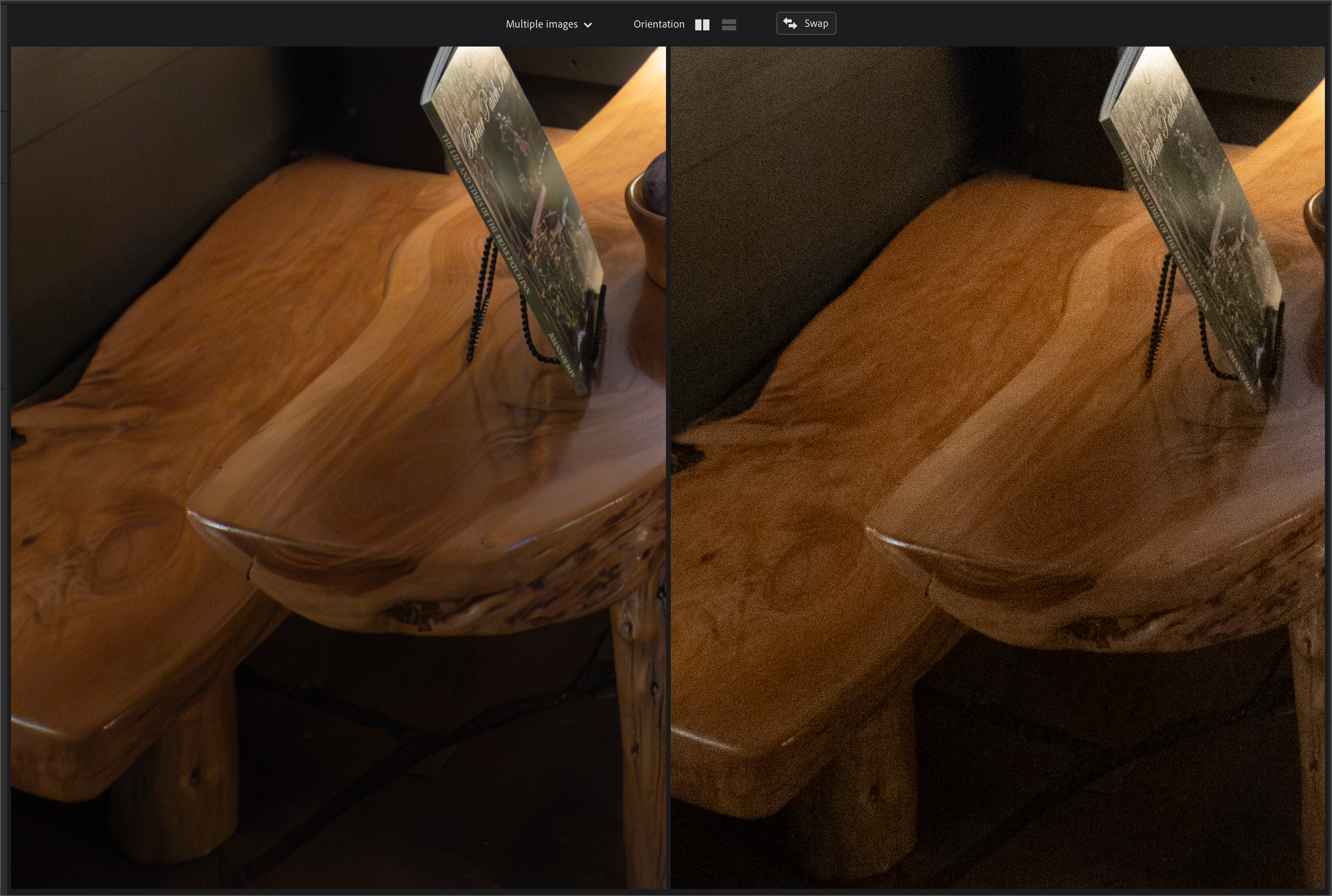
Here is LR denoise vs. out-of-the-camera ORF (raw): You can really see how noisy the OM-1 is in low light!
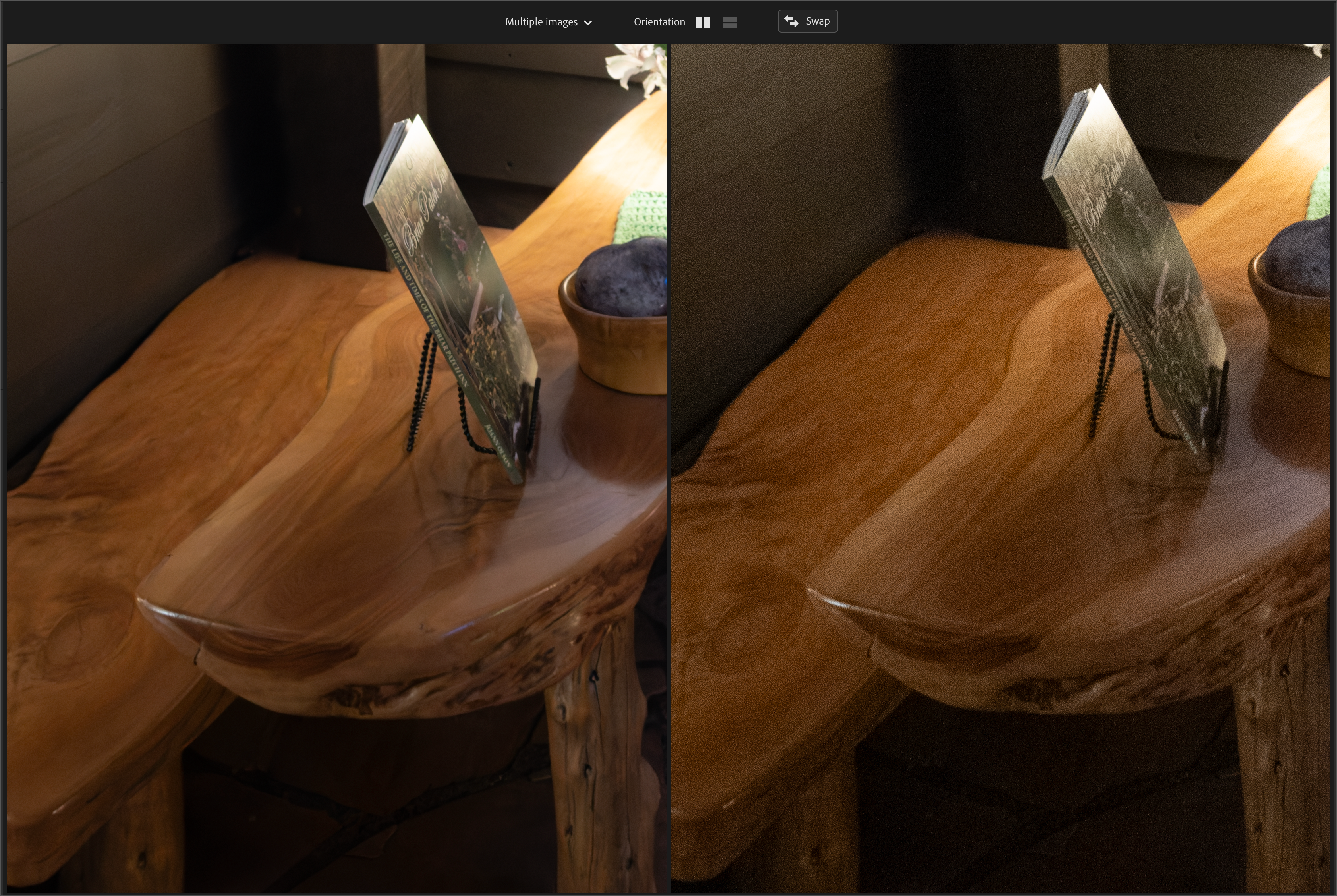
Here is DxO denoise vs. out of the camera ORF:
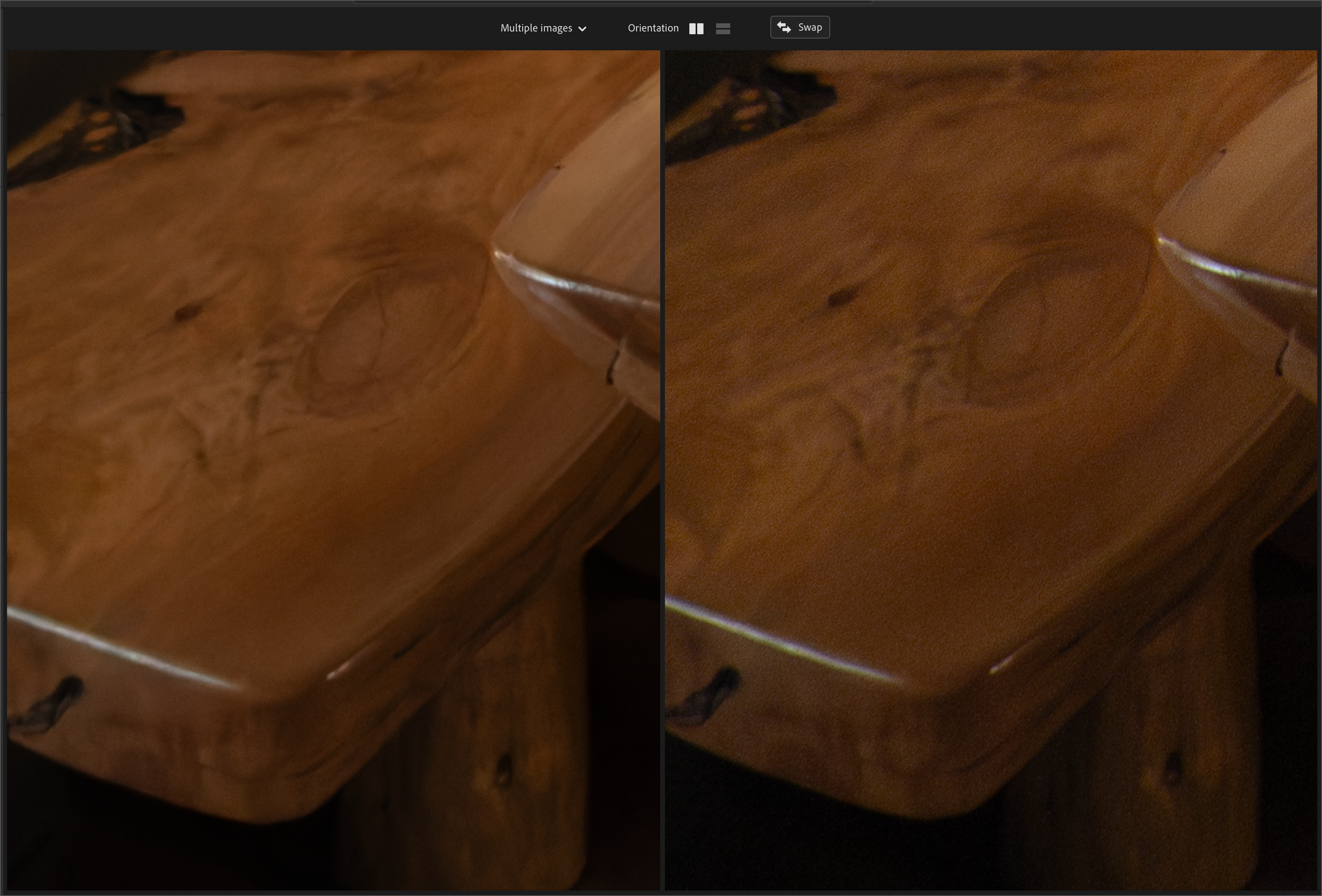
Finally, here is DxO vs. LR: I zoomed in to 200% for the best comparison.
In Summary, I hope you can see the large differences in the screenshots. The clear, hands-down winner is DxO. I would love for Adobe to improve the denoise in LR so I could skip this extra step, but here we are. Something to look for with denoise is preservation of detail; denoise tends to soften your picture, leaving you with less detail where you may want it. DxO also did a much better job in preserving details.
DxO also provided Optical Corrections: Lens Sharpness Optimization, Vignetting, Chromatic aberration, and Lens Distortion, but I did not take the time to analyze these.
I’m extremely impressed with DxO’s performance. On the downsides, it takes a while to process, and it’s an extra step in your workflow, but if you have a lot of noise, it’s worth the extra time. My average processing time per picture was 17-25 seconds.
I also learned that LR isn’t as bad as I thought. I’ll still use it for light noise issues, or when time is a factor, but for your good shots where you want maximum noise reduction and preservation of detail, DxO is worth every penny and your time.
Whether this is worth it to you depends on the camera you are using and the conditions you are shooting in. At the time of this blog post, DxO PureRAW 6 costs $139.99 as a one-time fee. If you just post your shots to social media in low-quality JPGs, you may not even need to denoise. But if noise is an issue for you and you’ve been unhappy with the software you are using, it’s worth your time to test-drive DxO.
Let’s go shoot some pictures tomorrow!
I'd love to hear your thoughts or suggestions! Please share your comments below: