Finished reading: Why Read Moby-Dick? by Nathaniel Philbrick 📚
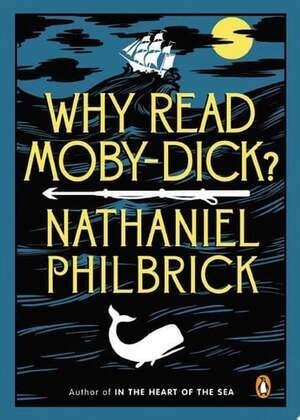
Finished reading: Why Read Moby-Dick? by Nathaniel Philbrick
Confession: I’ve never read Moby-Dick.
Nathaniel Philbrick makes me want to. In just 144 approachable pages, he offers a glimpse into the history of Melville’s classic and the life behind it: his inspirations, his muse, his family problems, and the guilt and doubts he wrestled with while writing. I love this kind of behind-the-scenes drama. For example, the first draft didn’t even include Captain Ahab.
Philbrick also explores the novel’s prose and meaning, giving you enough to appreciate it without spoiling the experience of reading it yourself.
Most of all, however, I am interested in getting you—yes, you—to read, whether it be for the first time or the twelfth time, Moby-Dick.
I thoroughly enjoyed Philbrick’s book. Maybe I’ll even dip a toe into Moby-Dick, the novel originally meant to be called The Whale.
If you’ve never read Moby-Dick, Philbrick gives you a way into the classic. If you have, I think you’ll enjoy finding out how the sausage was made, as they say.
What saddens me is that Melville never lived to see the recognition his novel would eventually receive. I’ll let Philbrick tell that part of the story.
The irony is that when Moby-Dick was first published in the fall of 1851, virtually no one, except for the author to whom the novel was dedicated, Nathaniel Hawthorne, and his wife, Sophia, seems to have taken much notice. By the time of Melville’s death in 1891, Moby-Dick had sold a grand total of 3,715 copies. (As a point of comparison, Typee sold 16,320 copies.) It wasn’t until after World War I that what had begun as a few belated plaudits by some Canadian and English readers had become a virtual tidal wave of praise…
Even if you never tackle Moby-Dick, I recommend this little book. And who knows? It might just make you want to.
144 pages · Published 2011
I'd love to hear your thoughts or suggestions! Please share your comments below: