Finished reading: The Wreck of the Mentor: A True Story of Death, Despair, and Deliverance in the Age of Sail by Eric Jay Dolin 📚
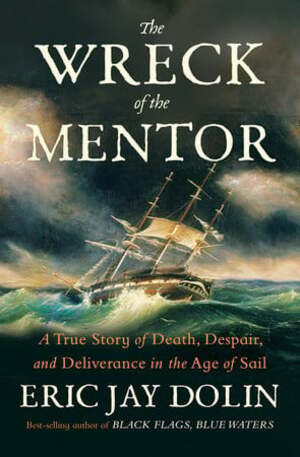
Finished reading: The Wreck of the Mentor: A True Story of Death, Despair, and Deliverance in the Age of Sail by Eric Jay Dolin
A deep dive into the wreck of the Mentor and what happened to its crew, with many side stories of the history of the Palau Islands, all the wrecks, and the English and American sailors who drifted upon their shores. Some stayed for years until they were rescued; others stayed for the rest of their lives, having found a new way of life. One of the best maritime history and survival stories I have read in a long time. Highly recommend.
I’ve never read so much history on “beachcombers” before. I’ve always wondered about the sailors who jumped overboard near islands, were shipwrecked and never rescued, or were left behind as insurance for the ship’s return with the agreed-upon supplies. When you consider life in the early 1800s and all that came with it, you can see how enticing it would have been to stay in what one thought was paradise. The author weaves together many beachcombers' tales, giving you a good background on their lives.
The first person to use the term “beachcomber” was Richard Henry Dana Jr., in Two Years Before the Mast (1840). A few years later, Herman Melville would become a beachcomber in the Marquesas and write about his experience in his novels Typee and Omoo. Although the term dates back to 1840, the kind of person it identifies was of a much older vintage. For example, on a voyage around the world between 1806 and 1812, British sailor Archibald Campbell observed in 1809 in Hawaii,
At one time during my stay, there were nearly sixty [W]hite people upon Wahoo [Oahu] alone; but the number was constantly varying, and considerably diminished before my departure. Although the great majority had been left by American vessels, not above one third of them belonged to that nation; the rest were almost all English, and of these six or eight were convicts, who had made their escape from New South Wales.
Many inducements are held out to sailors to remain here. If they conduct themselves with propriety, they rank as chiefs, and are entitled to all the privileges of the order; at all events, they are certain of being maintained by some of the chiefs, who are always anxious to have [W]hite people about them.
Captain Barnard’s quote on his birthday really stuck with me; we all feel like we’re in a world of trial at times.
In the wee hours of the morning, Barnard ruefully reflected on the fact that it was his birthday, and that it had been thirty-three years since he made his “appearance into this world of trial.”
And there’s always the sad truth: the Europeans' arrival changed the Palauans and their way of life forever.
Palauans, who had earlier welcomed foreigners and eagerly took their guns and goods, grew to loathe their connections to these outsiders, especially in light of the devastation they wrought. In 1900, it was estimated that the Palauan population stood at roughly four thousand, a far cry from the twenty thousand to fifty thousand who inhabited the islands before the Westerners arrived.
If you enjoy maritime history or a good survival story, this one is well worth your time.
272 pages · First published 2026
I'd love to hear your thoughts or suggestions! Please share your comments below: