The Indifferent Stars Above
My posts about this book
Finished reading: The Boys in the Boat by Daniel James Brown 📚

Finished reading: The Boys in the Boat Nine Americans and Their Epic Quest for Gold at the 1936 Berlin Olympics by Daniel James Brown 📚
Another outstanding book by Daniel James Brown; the man can write. I know I’m late to the party on this one, but after reading The Indifferent Stars Above, I knew I had to read more by Mr. Brown.
You probably know the story from either the PBS documentary or the movie, but if you haven’t read the book, you need to.
The detail and backstory of the main characters are a story unto themselves. These kids grew up in a very different time, during very difficult times. The author goes deep into the backstory of several of the rowers, coaches, and shell makers, and it’s worth your time. The backstory of these rowers matters and goes a long way toward understanding why they worked so hard and who they were. Your heart will break, and your eyes will tear up as you hear Joe’s story. It’s just amazing what he went through growing up and just to stay in college.
It was the fourth year of the Great Depression. One in four working Americans—ten million people—had no job and no prospects of finding one, and only a quarter of them were receiving any kind of relief.
Somewhere in the neighborhood of 350 million tons of American topsoil had become airborne in that single storm. The New York Times proclaimed it “the greatest dust storm in United States history.” But in fact the greater storms, and the greater suffering, were still months ahead.
You will learn about rowing, shell building, and what it was like to survive during the Depression and the Dust Bowl.
Western red cedar (Thuja plicata) is a kind of wonder wood. Its low density makes it easy to shape, whether with a chisel, a plane, or a handsaw. Its open cell structure makes it light and buoyant, and in rowing lightness means speed. Its tight, even grain makes it strong but flexible, easy to bend yet disinclined to twist, warp, or cup. It is free of pitch or sap, but its fibers contain chemicals called thujaplicins that act as natural preservatives, making it highly resistant to rot while at the same time lending it its lovely scent. It is beautiful to look at, it takes a finish well, and it can be polished to a high degree of luster, essential for providing the smooth, friction-free racing bottom a good shell requires.
You will learn about how popular rowing was during this time and the rivalry between West Coast and East Coast.
In the 1920s and 1930s, collegiate crew was wildly popular, often ranking right up there with baseball and collegiate football in the amount of press it received and the crowds it drew.
For days, department stores, electrical appliance stores, the Sherman Clay piano store, even the jewelry store Weisfield & Goldberg had been doing a land-office business selling new Philco 61F Olympic Special cabinet radios. Despite the $49.95 price tag, Seattleites had been snatching them up. Each came with a shortwave tuner and a special “high-efficiency aerial” kit to ensure clear reception of both the standard radio broadcast on NBC and shortwave broadcasts in a variety of languages direct from Berlin.
My highest recommendation for this book; it was a pleasure to read. I looked forward to my next chance to read it every day, and I found myself not wanting to read it as I neared the end so it wouldn’t end.
Finished reading: The Indifferent Stars Above by Daniel James Brown 📚
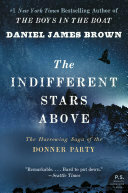
Finished reading: The Indifferent Stars Above by Daniel James Brown 📚
This was an outstanding book, well written with lots of history and side stories. I don’t give out five-star reviews very easily, but this earns its place.
And they had nailed the boards above her face, The peasants of that land, Wondering to lay her in that solitude, And raised above her mound A cross they had made out of two bits of wood, And planted cypress round; And left her to the indifferent stars above. ~W. B. YEATS, “A Dream of Death”
The author closely follows Sarah Graves and her family on their trek to California. You’ll find lots of history and detail you may not get in other books on the Donner Party. The story really comes alive as you follow the Graves and their companions into the misery to come.
The book includes enough detail and deep dives into how people in the 1846 - 1847 timeframe thought and what they believed to make you feel like you were trekking with them.
This was the first book I read at night, and because we were traveling and my wife wanted to hear the story, we listened to the audiobook version during our drive. I really enjoyed reading and then listening to what I read the next day. I would always miss something in my reading, and listening to the audio version made it clearer or brought it out in a new light as we discussed the story together.
You become very aware that people today and people in 1846 were very different in knowledge, but mostly in toughness and tenacity. I would bet that people today, put in their situation, would fare far worse.
One by one, feathery flakes landed on cold blankets and buffalo robes, on sweat-slicked hair, on shoulders turned to the sky, on soft cheeks—each flake delicate and slight, but each lending its almost imperceptible weight to the horror of what was about to happen.
If there is one thing I could nitpick, it would be that the stories of how they dealt with the local tribes are always one-sided. The Indians' perspective is never discussed.
I learned a lot from this book and will be diving deeper into this time period of history. Even days after I’ve finished the book, it stays on my mind. Thinking about the mistakes made, the horrors, the loss, the recovery. I think everyone should read this book or any book on the Donner Party. It brings perspective. It shows how far we have come in our society, science, and technology. And it ultimately brings hope that even after horrific accidents, you can still live and love.
THE MEAGER BY THE MEAGER WERE DEVOURED All earth was but one thought—and that was death Immediate and inglorious; and the pang Of famine fed upon all entrails—men Died, and their bones were tombless as their flesh; The meager by the meager were devoured. —Lord Byron, “DARKNESS”